

School life · Meals
A menu planned by a dietitian, portions by age.
Meals are included in the annual fee. The menu is planned by a dietitian around seasonal vegetables and fruit; the monthly menu is shared on the parent portal and campus notice boards before the month begins.
Approach
How we see the table
A well-fed child concentrates in class; lunch is part of the school day.

How much a child gets out of the afternoon lesson is closely linked to what was on their plate at lunch. That is why we plan the menu as carefully as the timetable.
The menu is planned by a dietitian. Each week pulses, vegetables, meat and fish rotate in balance; fruit and yoghurt are always on the table. We do not put produce on the menu out of season: winter vegetables are cooked in winter, summer vegetables in summer.
Read more
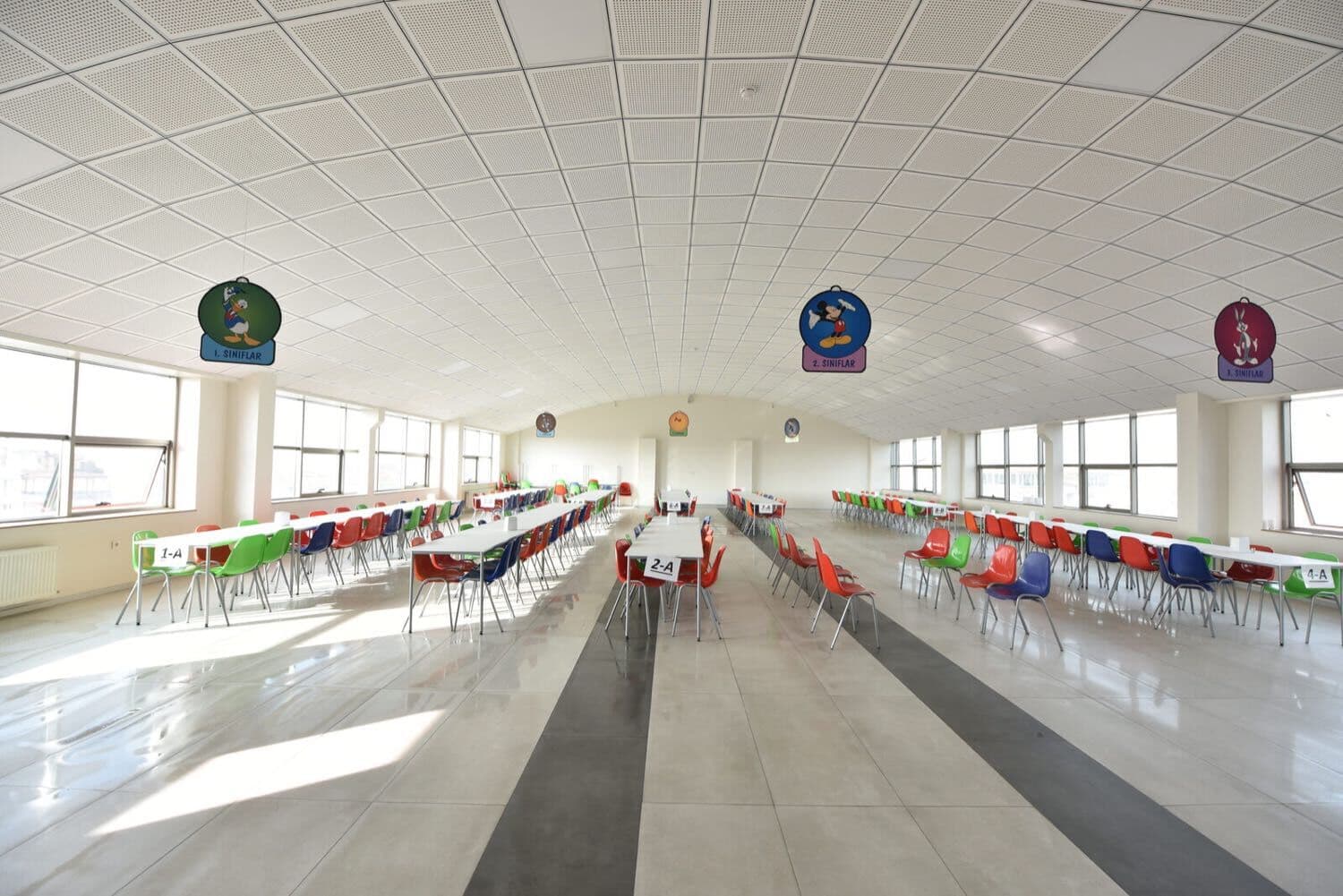
The younger children eat at the same table as their teachers. That is where they learn to taste their food, wait their turn, clear their plate and not waste food.
Meal times
Meals by school level
The longer the day at school, the more meals there are.
Kindergarten
Breakfast, lunch and afternoon snack: three meals.
Primary school
Breakfast and lunch: two meals.
Middle school
Lunch.
High school
Lunch.
Kitchen
Kitchen rules
Every step, from ingredients to samples, follows the regulations.
Every product that enters the kitchen comes from a certified supplier and complies with the Turkish Food Codex. Meals are cooked in the school kitchen; no stock cubes or sweeteners are used.
Age sets the portion. Giving a kindergarten child a high school student’s plate leads to waste, and the reverse leads to hunger. A sample is taken from every dish and kept for 72 hours, so that if a question arises, it can be checked.
Portions
Ages 3-7 half, ages 7-12 three quarters, over 12 full.
Ingredients
Certified products that comply with the Turkish Food Codex.
Samples
A sample of every dish is kept for 72 hours.
Additives
No sweeteners or stock cubes are used.
Menu
Monthly list
On the parent portal and campus notice boards the week before the month begins.
The monthly menu is published on the parent portal and put up on the campus notice boards in the week before the month begins. So when you plan dinner, you know what your child had for lunch, and they do not eat the same dish twice.
The list gives each day’s soup, main course, side dish, and fruit or dessert. The kindergarten breakfast and afternoon snack, and the primary school breakfast menu, are also listed separately. Under each day, the main allergens in that day’s dishes (milk, egg, gluten, nuts) are given.
Special needs
Allergies and diets

If your child has a food allergy or a diet recommended by a doctor, we ask you to let us know at enrolment with a medical report. The information is passed to the kitchen team, the class teacher and the school nurse.
If the menu includes a risky dish for a child with an allergy on a given day, a suitable plate is prepared instead. At the younger levels, the teacher also checks the child’s plate in the dining hall.
Frequently asked
Parents’ questions
Are meals paid for separately?
No. Meals are included in the annual fee; there is no separate payment.
What happens if my child does not finish their meal?
We do not force them, but we keep an eye on it. At the younger levels the teacher watches what the child eats; if there is something they regularly do not eat, the teacher talks to the parents.
Can I send food from home?
Where there is a health reason, this is decided together with the school management. The scope of the meal service and the rules on this are set out in the enrolment contract.
Who plans the menu?
The school dietitian. The menu is planned by calculating the calorie and nutrient balance for the needs of each age group.

Next step
See the dining hall for yourself.
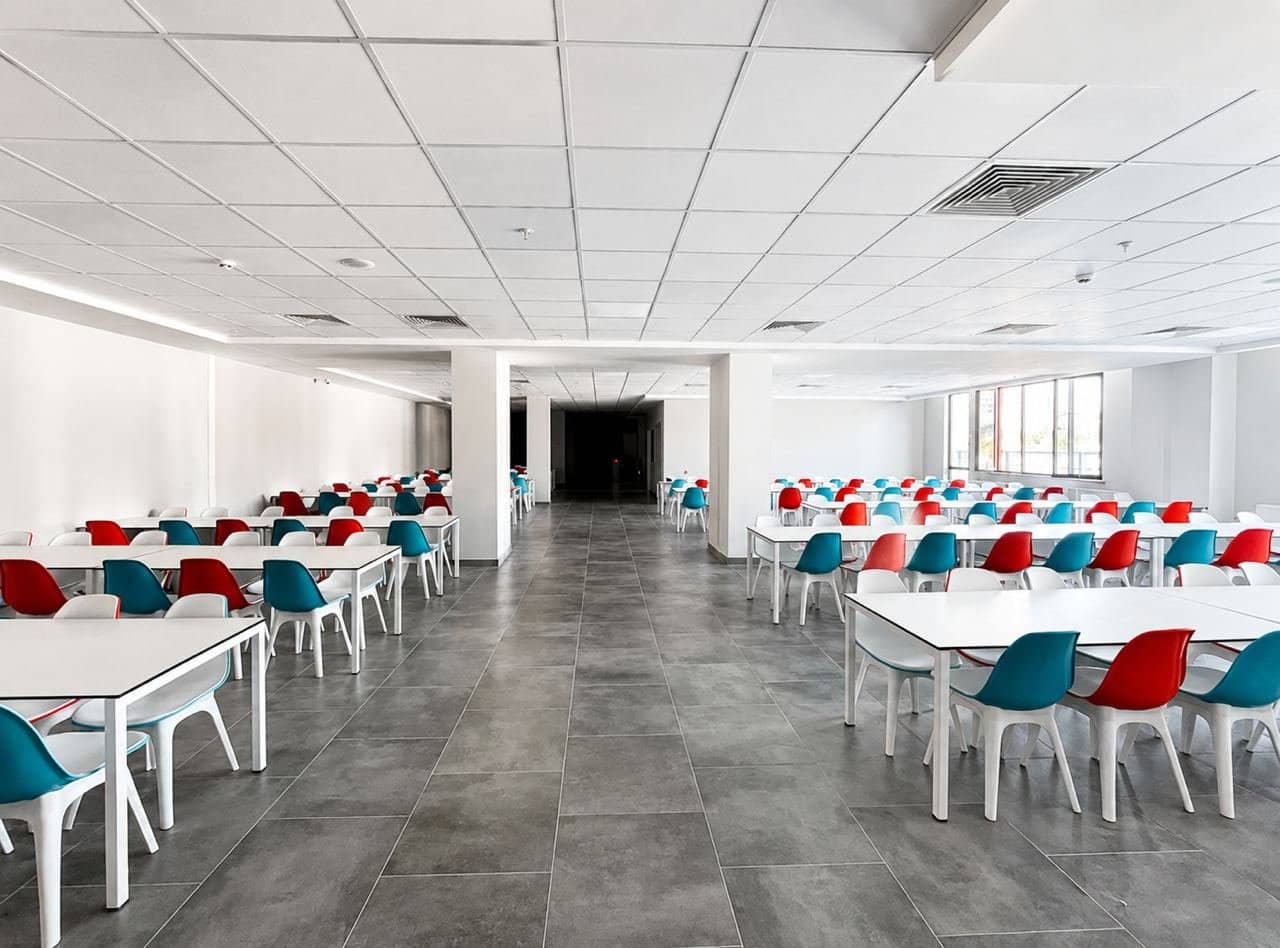
On a campus visit we also stop by the dining hall and the kitchen. If you come around lunchtime, we can taste the day’s menu together.