

School · About us
In Ankara since 2006, from kindergarten to high school.
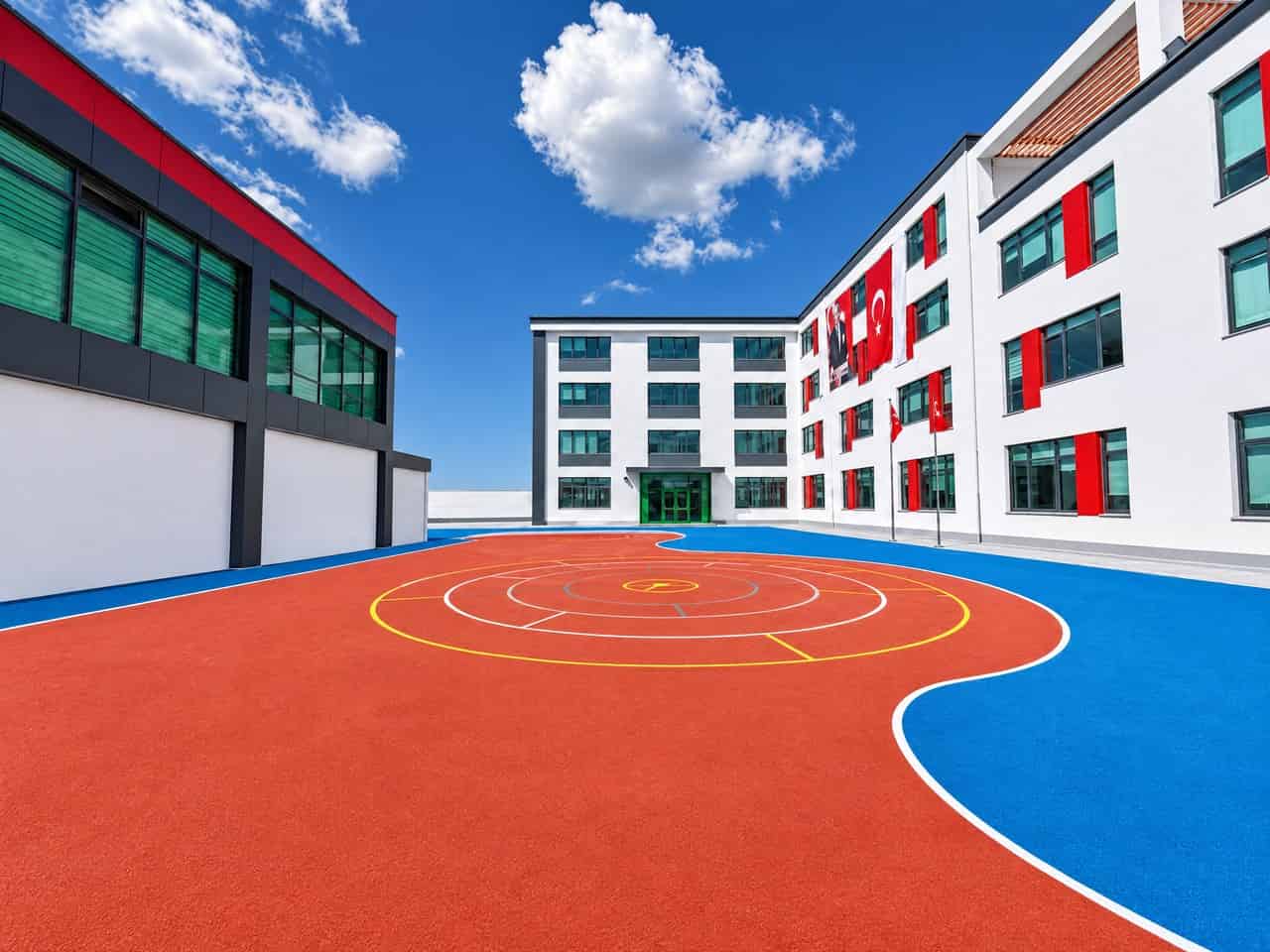
Bilişim Koleji opened in Pursaklar in September 2006. Today we work across three campuses with the same approach to teaching, built on the five traits of the Kaizen Model.

In brief
A school with twenty years behind it
We began with one campus and grew to three. Our view of what a school is has stayed the same.

Bilişim Koleji’s first day was in September 2006. The team that welcomed the first parents at the door of the building in Pursaklar was small, but it knew what it wanted: a place where children gain habits at school as well as knowledge.
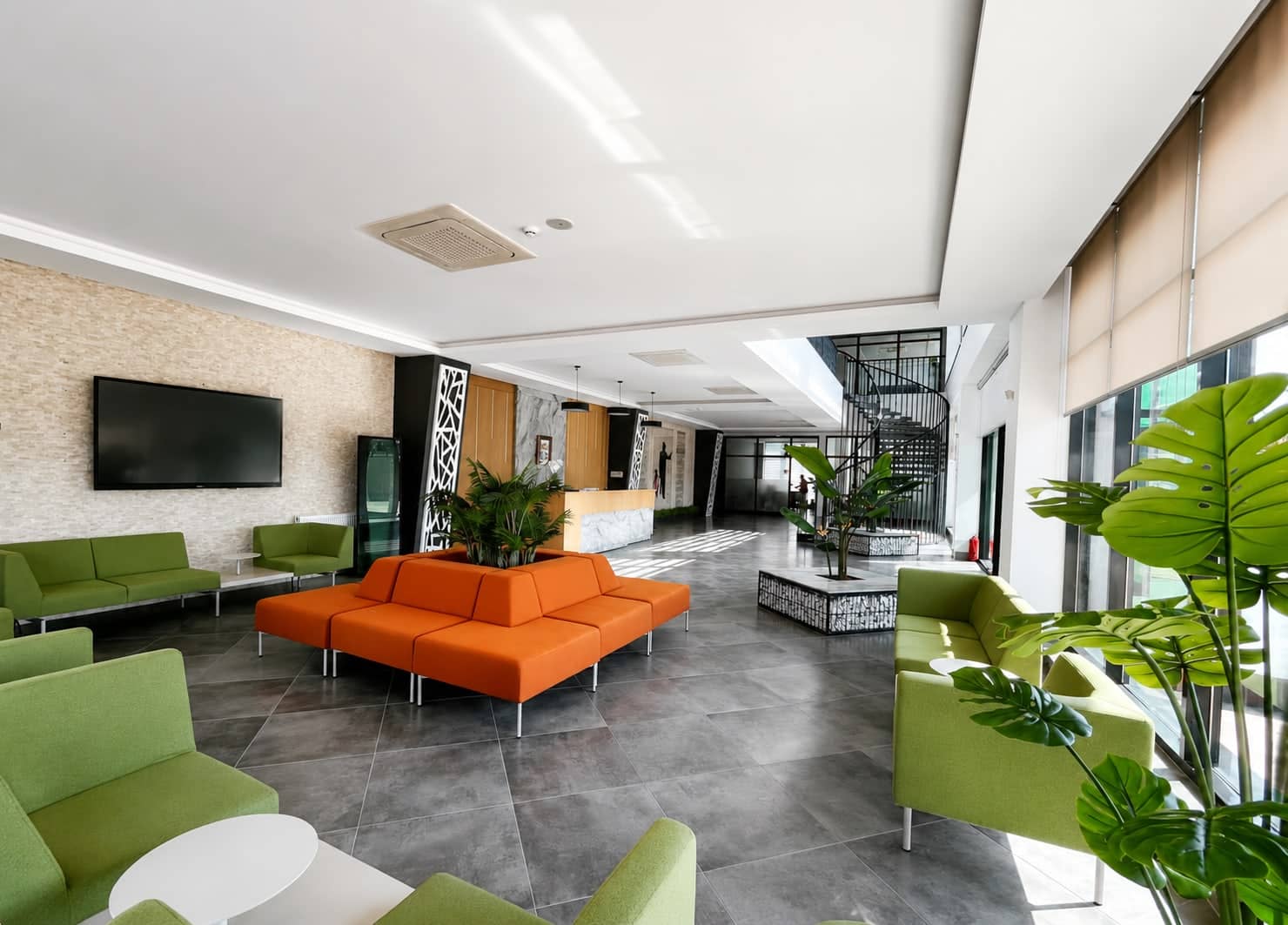
Over the twenty years since, the Çankaya and Hüseyingazi campuses opened, and four school levels, from kindergarten to high school, came together under one roof. A child can start kindergarten and finish high school at the same school. This continuity matters to us; teachers get to know both the child and the family over the years.
Read more
Today we work across three campuses with the same lesson plans, the same guidance arrangements and a shared framework we call the Kaizen Model.
- Year founded
- 2006
- First campus in Pursaklar
- Campuses
- 3
- Yeni Nesil, Çankaya, Hüseyingazi
- School levels
- 4
- From kindergarten to high school
Mission and vision
Our mission and vision
Our school in two sentences, and the work behind them every day.
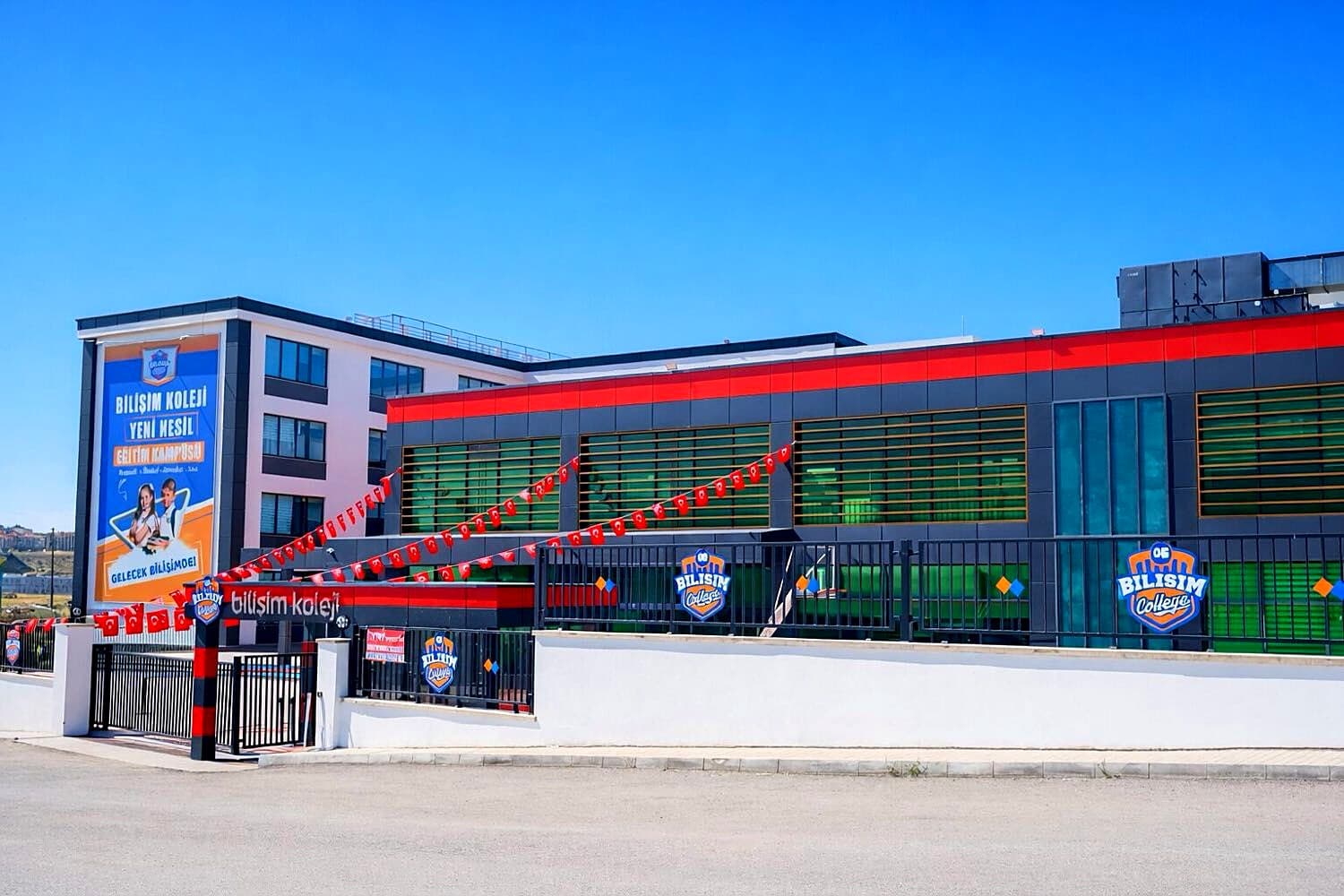
At most schools, mission and vision statements stay on the wall. We tried to write these two sentences concretely enough to carry them into lesson plans, guidance meetings and reports to parents. Each of them corresponds to a practice in the school calendar.
Read more
Kaizen means small, continuous improvement in Japanese. This idea, which gives our teaching framework its name, puts small, trackable steps taken every day ahead of grand words. Our mission describes what we do in the classroom today; our vision describes what we want to see in our graduates years from now.
Our mission
To offer every child, from kindergarten to high school, a school environment in which they can develop their talents and strengths to the full; to raise citizens of the world who stay connected to their roots, are open to the world, and turn what they learn into work and behaviour. We do this by speaking the same language as the family, writing values into the school calendar and making the child’s progress visible every week.
Our vision
To be one of the schools that provide education to international standards and are held up as an example in our country. The measure of this is our graduates: at least one project they have carried out themselves from start to finish, the ability to express themselves comfortably in Turkish and English, the ability to set up their own study routine, and a sense of responsibility towards the people around them. We want families to be able to follow this progress year by year and to see every promise we make kept.
Our values
Our values
The five traits of the Kaizen Model are how these values show up in the classroom.

We teach values within the school day, not on a poster. The weekly values theme is introduced in class on Monday, comes up throughout the week in lessons, at break time and in the dining hall, and is discussed with the class teacher at the end of the week.
Read more
We pass on our national and spiritual values by living them. National holiday ceremonies, trips to Çanakkale and Anıtkabir, Ramadan and kandil (Islamic holy night) programmes, and charity campaigns are fixed dates in the school calendar. The same calendar also includes a science festival, a project week and club days; children learn about their roots and about making things side by side.
Responsibility
Finishing what they start, keeping up with class duties, owning their mistakes. In the model, this corresponds to the “Responsible” trait.
Respect and empathy
Listening to those who think differently, treating younger and older people with courtesy, not staying silent in the face of bullying.
Effort and making
Turning knowledge into work: a circuit built in the workshop, code written, a project seen through to the end.
Honesty
Being open in exams, in homework and in play; being able to say “I don’t know”.
Belonging
Attachment to family, school, city and country; knowing and preserving their national and spiritual values.
A little better every day
Going one step further than yesterday. That is what the word kaizen means: small but never-ending progress.
History
A short history of the school
A school that began with one campus reached three campuses in twelve years.
We started in Pursaklar in 2006. Our Çankaya campus opened in 2010 and our Hüseyingazi campus in 2018. At Hüseyingazi, the four school levels from kindergarten to high school came together in the same building for the first time.
Read more
In recent years, two decisions have shaped the school as it is today. The first was Kaizen: the school’s artificial intelligence student character. The second was the Kaizen Model: the framework that turns the five traits we want to see in our students into a common language across all school levels.
2006 · Pursaklar
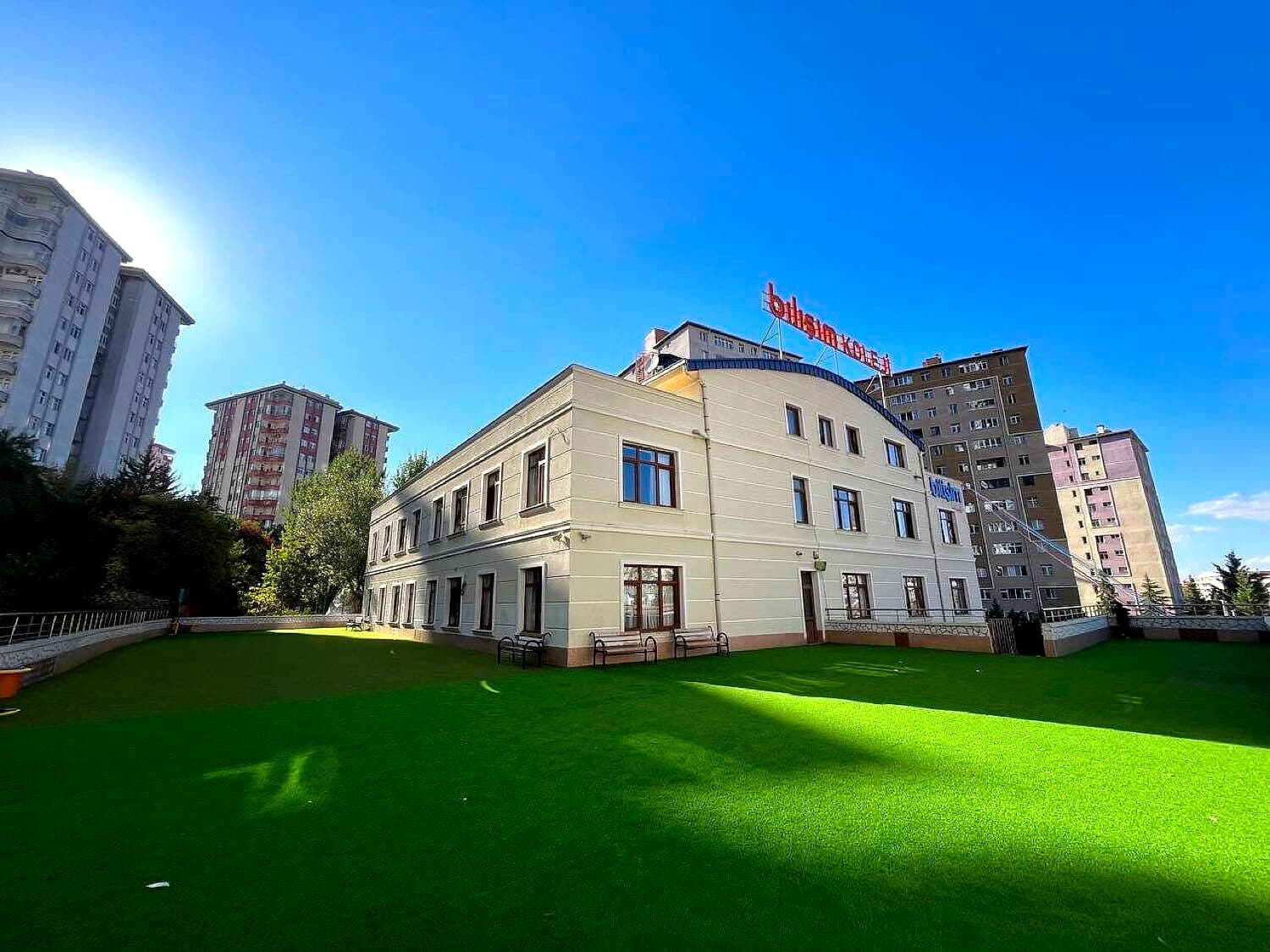
The first campus opened its doors in September. We started with a small team and a few classes.
2010 · Çankaya
A second campus in the centre of the city began teaching. Small classes and planned LGS preparation became this campus’s identity.
2018 · Hüseyingazi
A third campus, built on 8,500 m² of indoor space, opened in Mamak; the four school levels from kindergarten to high school came together in the same building.
2024 · The Kaizen character
Kaizen, the school’s artificial intelligence student character, was introduced. Its first song, “İşte Biziz, Bilişim” (“This Is Us, Bilişim”), was released on 1 January 2026.
2025 · Yeni Nesil Education Campus
Our school in Pursaklar moved into its new building, the Yeni Nesil Education Campus.
2026 · The Kaizen Model
The five traits were adopted as the shared teaching framework for all school levels. Lesson plans, guidance and reports to parents are written under these five headings.
Approach
Values and making
Values work written into the calendar, and projects finished in the workshop.
We run values education through activities written into the calendar: a weekly values theme, Ramadan and kandil programmes, national holidays, trips to Çanakkale and Anıtkabir. Children learn respect, responsibility and belonging by living them on these concrete days.
In workshops students code, build circuits and print parts on a 3D printer. In high school, machine learning work in Python has been going on for years. Our aim is for every student to have at least one project they can show before they graduate.
Read more
The Kaizen Model treats these two areas together. We want students to complete what they start and to feel responsible towards the classmates they work with.
Values in the calendar
A weekly theme, national and spiritual days, trips outside school.
Making in lesson time
Coding, robotics and design are part of the weekly timetable.
Our approach →
More
Other topics
Short summaries; the details are inside each card.
Three teams who put the MEB (Ministry of National Education) curriculum into practice in the classroom build your child’s week together.
When we choose teachers, we look at the relationship they build with children as much as at their subject knowledge. Teachers who have worked with us for many years are the school’s memory; those who join learn this memory alongside them.
Subject teachers, the guidance and counselling service and workshop instructors do not work separately. The information that a student is struggling in maths but standing out in a club comes to the same table. In meetings with parents, what these three sets of eyes have seen is discussed together.
- Subject teachers
- Every teacher holds a bachelor’s or master’s degree in their subject. They know the class and follow each student’s development every week.
- Guidance
- At least one school counsellor works at every school level; in high school every student has a careers coach.
- Workshop instructors
- Coding, robotics, science and art workshops are run by instructors who specialise in their fields; for high school projects, advisory support is sought from universities when needed.
A shared teaching framework, a shared calendar, three different districts.
The three campuses are parts of the same school. The teaching framework, the five traits of the Kaizen Model, the guidance arrangements and the activity calendar are shared; weekly practice varies with each campus’s facilities. Swimming and ice skating stand out at Yeni Nesil, laboratory hours at Hüseyingazi, and supervised study in small groups at Çankaya. Inter-campus project weeks and tournaments bring students together.
Each campus also has a character of its own. How close it is to the family’s home, which school level the child is at and what the campus offers determine the choice. We recommend that you do not decide without visiting.
- Yeni Nesil
- Between Keçiören and Pursaklar, four school levels from kindergarten to high school. A pool, an ice rink and large sports areas.Yeni Nesil Campus →
- Çankaya
- A small, calm school in the centre of the city. Kindergarten, primary school and middle school; planned LGS preparation.Çankaya Campus →
- Hüseyingazi
- Four school levels in 8,500 m² of indoor space; laboratories, supervised study rooms and workshops.Hüseyingazi Campus →
Every campus has a guidance and counselling service and an infirmary. When there is a problem, it is clear who calls and when.
School counsellors work in the guidance and counselling service. Students can knock on the door themselves, their teacher can refer them, and parents can come by appointment. What is said in a session is not shared in class without the student’s permission; if something concerns the student’s safety, the family is informed the same day.
To report bullying, the student or parent contacts the class teacher or the guidance and counselling service. The report is dealt with in the same week through separate meetings with those involved, passed on to the school management, and the family is told the outcome. Where a learning difficulty is suspected, the guidance and counselling service first observes the student in class, refers the family to a Guidance and Research Centre (RAM, the state assessment service) if necessary, and puts together a support plan at school with them.
A health officer is on duty in the infirmary. In the case of a minor illness the family is called, and medicine is given only with parental consent. In an emergency, 112 is called and the family is informed at the same time. We do not publish photographs of students on our public website; class updates are shared only on the closed parent portal and with the parent’s written consent.
- Guidance sessions
- At the student’s own request · Referred by a teacher · By parent appointment
- Reporting bullying
- To the class teacher or the guidance and counselling service · Meetings the same week · Feedback to the family
- Health
- Infirmary and health officer · Medicine only with parental consent · In an emergency, 112 and the family
Environmental awareness is not a lesson topic but part of the school’s daily routine.
The best way to explain sustainability to children is to practise it at school every day. Waste is sorted in classrooms, and paper and plastic go to recycling; thanks to tablet learning, photocopying and paper use go down. In the dining hall, food left on plates is monitored and portions are adjusted accordingly.
Our students are not spectators of this routine but the ones responsible for it. On every campus, an environment team made up of students appoints class monitors and discusses energy and water use once a month. Younger children plant seeds in the school garden and see how compost is made; older students take their environmental projects to science fairs and eTwinning partnerships. This is the most concrete form of the Responsible trait in the Kaizen Model.
- Waste sorting
- Separate bins in every classroom and corridor; recycling is collected regularly.
- Less paper
- Tablet learning, digital homework and the parent portal reduce paper use.
- No food waste
- Leftover food in the dining hall is monitored and portions are adjusted accordingly.
- School garden
- Seeds, seedlings and compost with the younger children; watching the seasons.
- Environment team
- A team of students takes responsibility for energy, water and waste.
Parents see the child’s week too. There are no surprise reports.
We do not leave our relationship with parents to the end-of-term meeting. Homework and attendance can be followed daily on the parent portal; parents of students in an exam year receive a monthly report. When there is a problem, the teacher or the school counsellor calls, and parents can also make an appointment and come to the school.
What we expect from families is clear too: to speak the same language at home. Even asking a child “what did you do today, what did you try?” instead of “what did you learn today?” is the Kaizen Model at home.
Questions
Frequently asked questions
Which curriculum does the school follow?
We follow the MEB curriculum. On top of it we add activities that deepen understanding of concepts, intensive English, workshop lessons and a values programme.
Are there differences between the campuses?
The teaching framework and the calendar are shared; weekly practice varies with each campus’s facilities. Çankaya has no high school; Yeni Nesil and Hüseyingazi offer all four school levels.
Who is Kaizen?
Kaizen is our school’s artificial intelligence student character; Kaizen is not a real student. As an example who shares the same five traits as our students, Kaizen appears in activities and in the way the school tells its story.
Can we visit the school?
Of course. By making an appointment through the contact page or by phone, you can tour the campus of your choice with our admissions team.
How does admission begin?
The admissions process begins with an initial meeting. You can find the steps and the required documents on the admissions page.

Next step
See the school for yourself
The best way to get to know a school is to walk down its corridor one morning. Choose the campus that suits you and we will show you around.
- Yeni Nesil CampusKeçiören · PursaklarOpen in Maps
- Çankaya CampusÇankayaOpen in Maps
- Hüseyingazi CampusHüseyingazi · MamakOpen in Maps